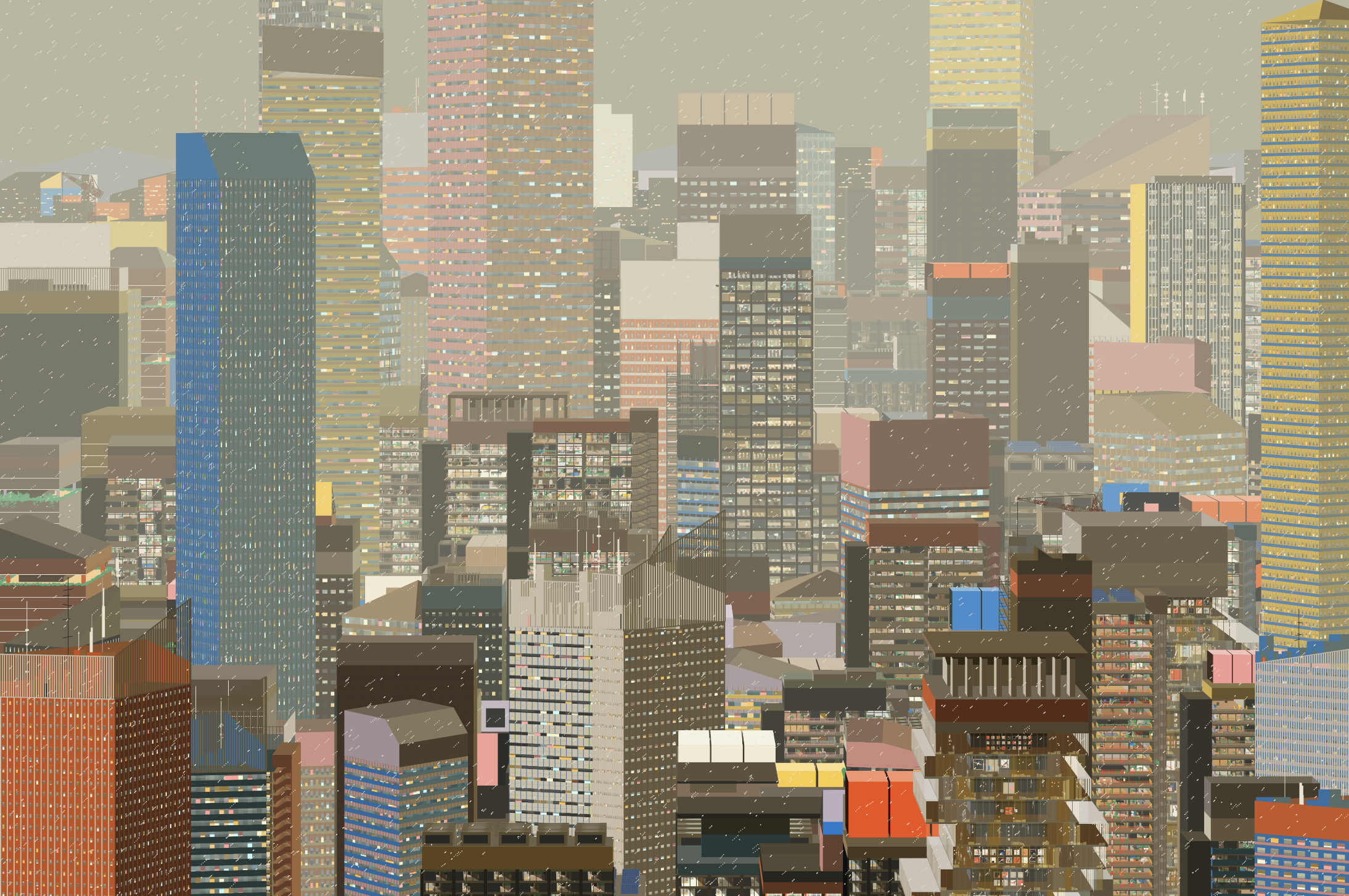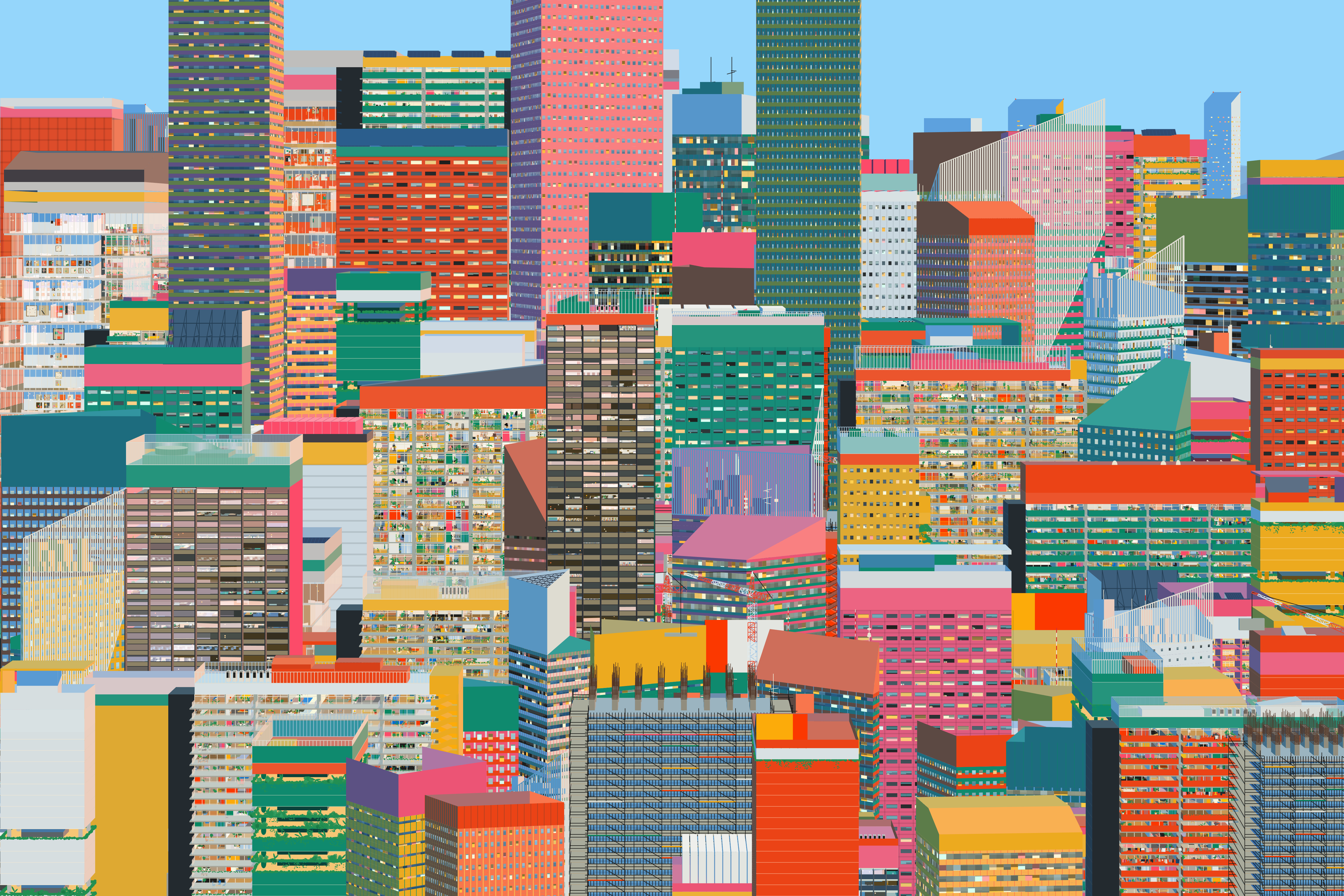
fxhash is thrilled to present Studio Yorktown’s: Theoretical Civilization.
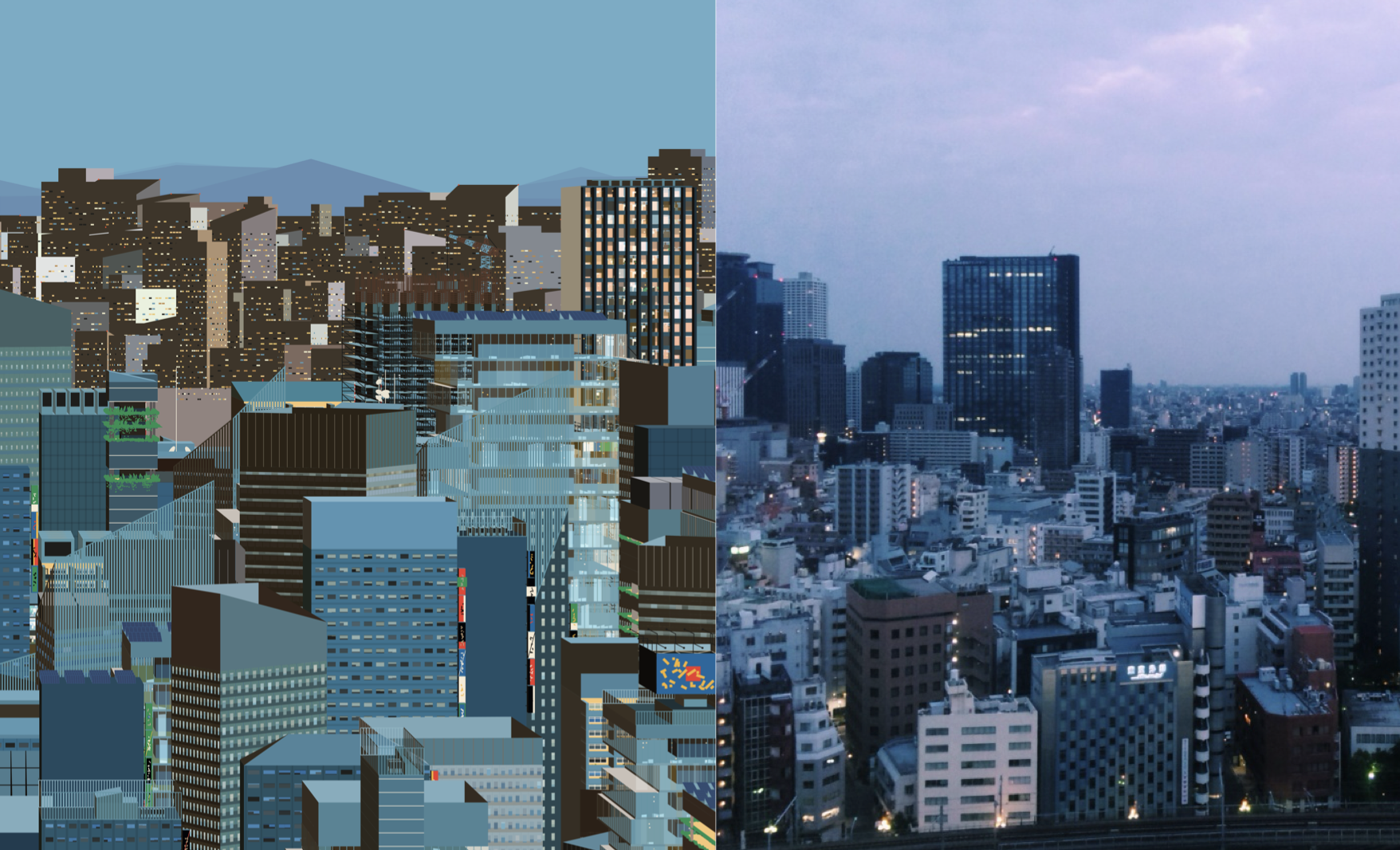
It began with a window view. Years ago in Tokyo, looking out from the Parco building toward the dense glow of Shibuya, Bruce felt a spontaneous pull to “generate a city” through code. That spark lingered, carried through earlier projects like Scenes from a Train Window and Tecton Optima, even before he had any clear sense of how to build such a system. The idea simply stayed with him.
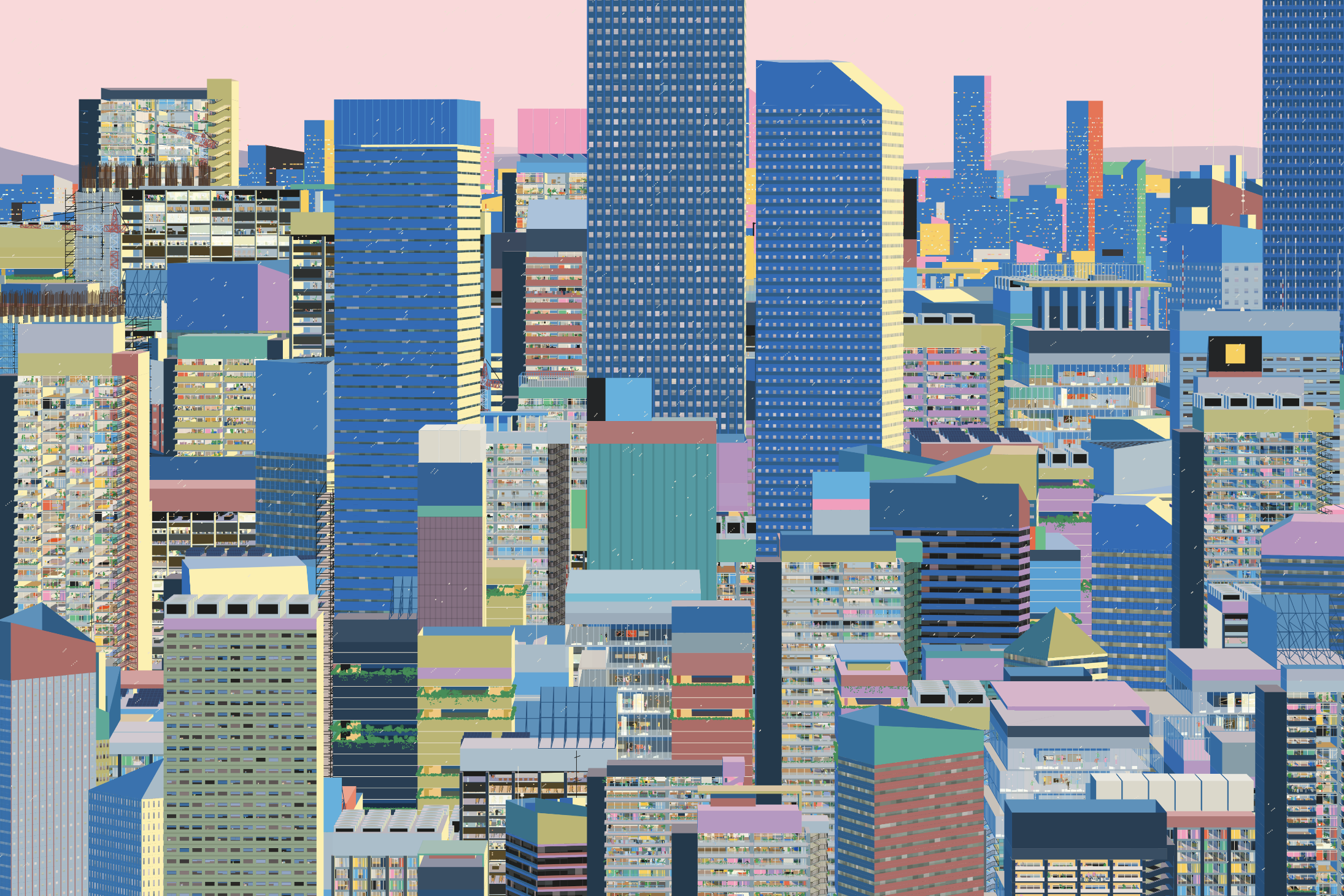
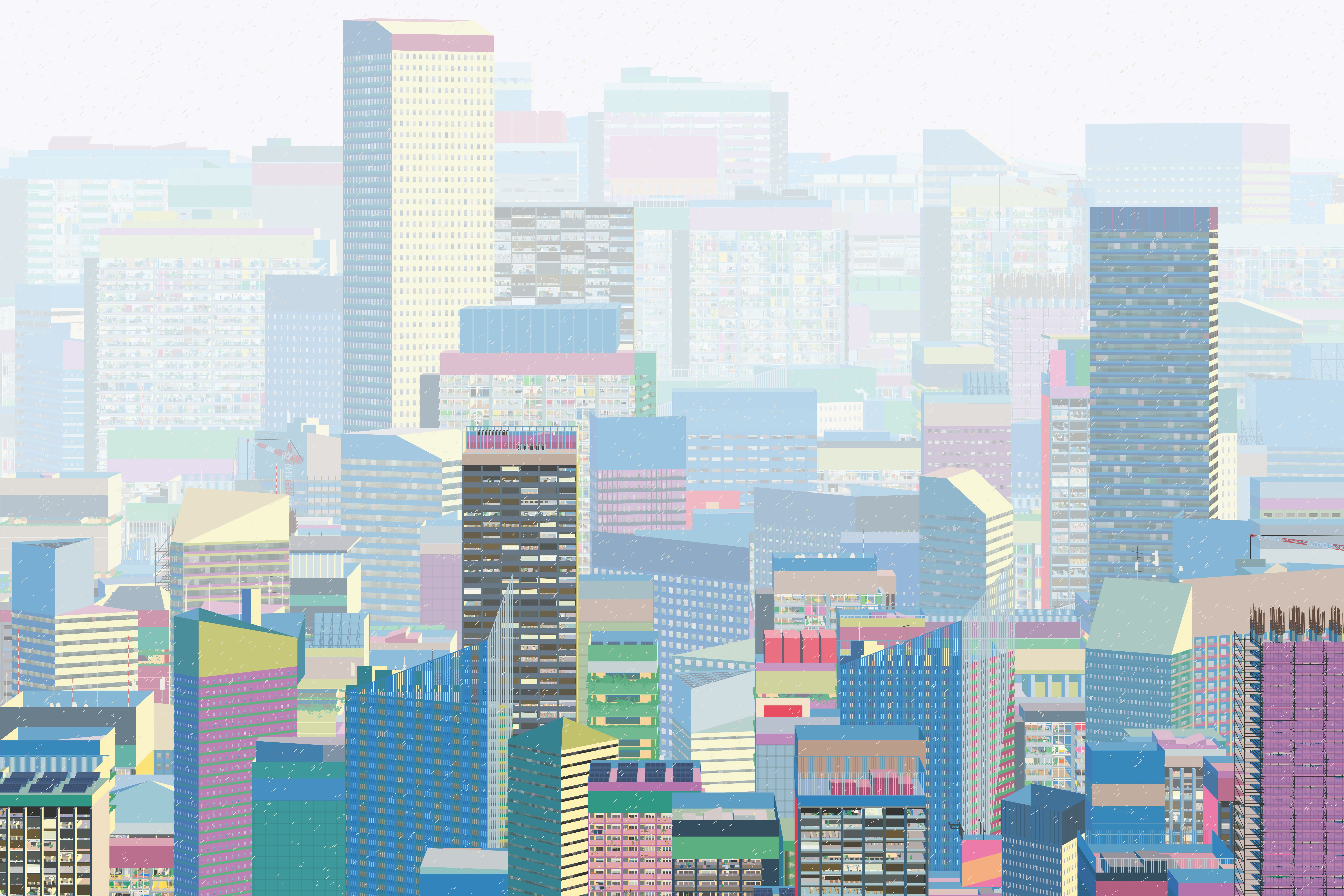
Theoretical Civilization shifts away from his structural studies toward vast digital-cityscapes. Earlier series were shaped partly by technical limitations, but with time he found himself returning to a more stylized, illustrative aesthetic rather than chasing realism. He describes this new body of work as “algorithmic illustrations,” grounded by an evolving mastery of scale, density, and spatial logic.
The beginning was simple: a street-level view, flat windows, fewer buildings. Everything changed the moment he realized he could generatively create rooms with depth, allowing us to peer inside and interpret our own narratives. The project grew from architectural sketch into world-building. As he puts it, “the possibilities and the challenge instantly seemed much richer.”
This is a culmination of every series before it (marking the 11th via FXHASH), not by design but through the natural progression of practice. He describes an emergent moment familiar to many generative artists: somewhere around 60 to 80 percent completion, the work begins “speaking in its own voice,” shifting from being directed to becoming its own autonomous entity. That emergence is where this series found its identity separate from Tesseract, Perpendicular Inhabitation, Komsije, and others.
At its heart, this is an observation. An observation of density and complexity, but also of the human moments scattered throughout a metropolis.
Inside the windows are traces of life: a messy bed, a single box, a water cooler half-full. These details are never scripted. They exist as possibilities, leaving us to infer… someone arriving, someone leaving, someone pausing between meetings. He’s interested in that space between presence and absence. How can a single empty desk feel heavier than a crowd of people?
The technicality is formidable. Built entirely in p5.js without any 3D libraries, the system relies on a pseudo-2.5D logic that choreographs each building, room, and object relative to a single vanishing point. Everything must be drawn in exactly the correct sequence. A single misordered cube can break perspective. Rooftops in particular proved the most stubborn challenge, inspired by the “chaotic order” of Shibuya’s skyline. But these obstacles shaped the final aesthetic, pushing him toward an illustrative language that belongs specifically to this series.
The core is familiar to us all: the city as possibility. As he explains, cities are “systems upon systems upon systems,” miraculous in their choreography. Yet each is also defined by tiny choices and small human traces. By encoding these rooms and micro-scenes through modular functions, he allows chance and intention to collaborate. He sets the parameters; the algorithm surprises him.
Generative art should not be alienating. It is simply a method for creating something that moves people.
It’s encouraged to zoom deeply into the high-resolution outputs. Each piece holds dozens of potential compositions, like snapshots from a film. Immerse yourself in scale: the overwhelming vastness, followed by the subtle beauty hidden in its details. With every visit, this abundance allows us to see something new: resonating differently depending on our emotional state. This simple truth lives embedded within: life is contradictory and layered, all happening at once. Sometimes, perspective…like looking down at a city from far above, helps reveal its complex beauty.
These cities bring him back to the wonder he felt encountering urban spaces as a child. Growing up in a quiet village near Oxford, his first experience of a dense environment felt magical. That contrast has fueled a lifelong curiosity about built spaces and the people in them. Theoretical Civilization is an extension of that fascination and a personal milestone: the longest he has ever worked continuously on a single code-based project.
Theoretical Civilization is not a manifesto. It’s an invitation to imagine freely. To encounter density, notice quiet gestures, and let the mind wander through its windows.
In these cities built entirely from code, he finds not just structure but story, not just complexity but possibility. And at their tallest peaks, if he had to choose a name, he smiles and suggests one: York Tower.
About the artist
Kwame Bruce Busia, better known as "Bruce," the artist and creative mind behind Studio Yorktown. As a generative artist with architectural beginnings, he uses code to explore his creativity and discover the potential of web3 for art. His work combines simple visuals with thought-provoking ideas, embodying my belief in simple, strong concepts, harmonious color, proportion, and meticulous attention to detail.