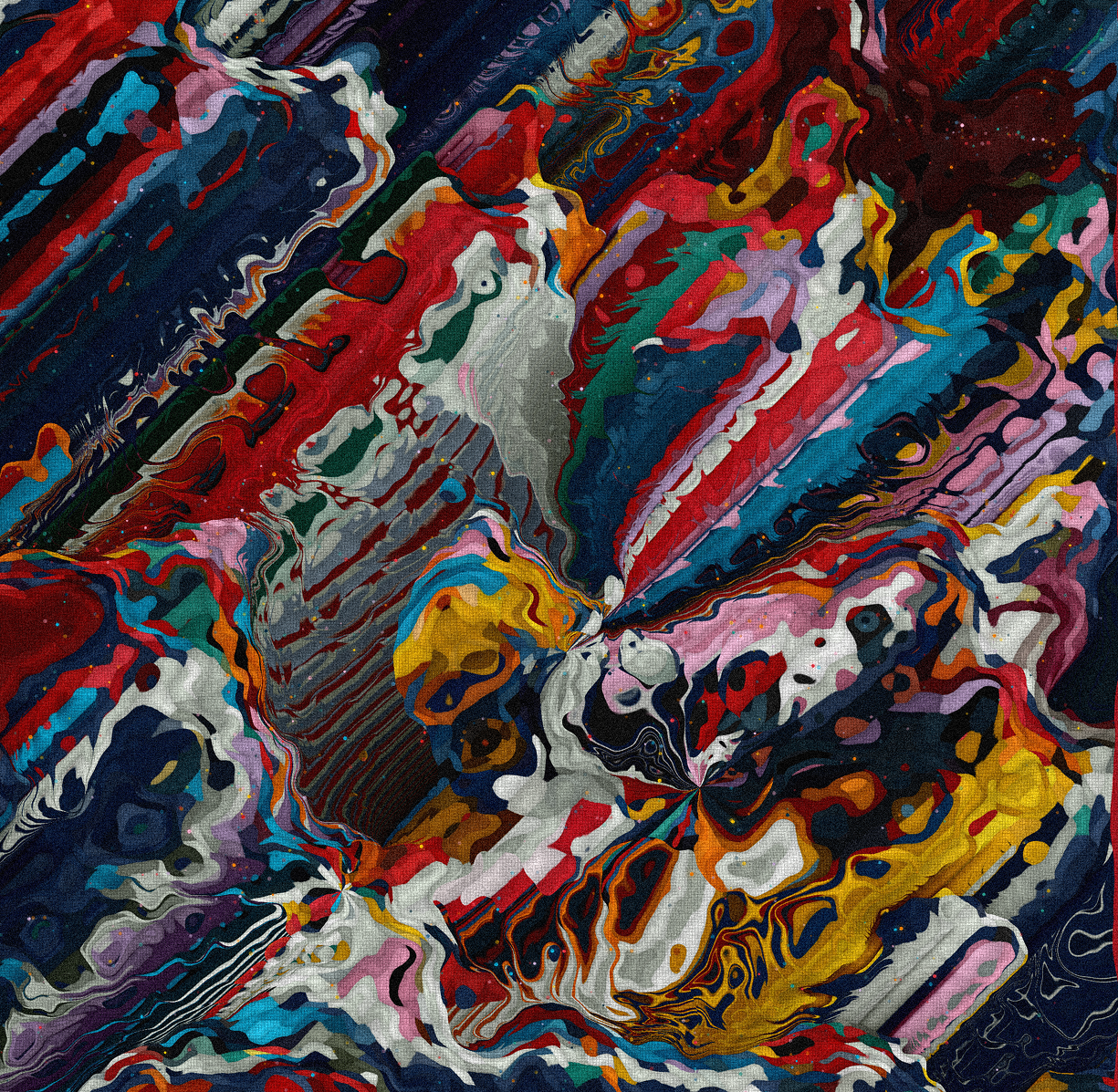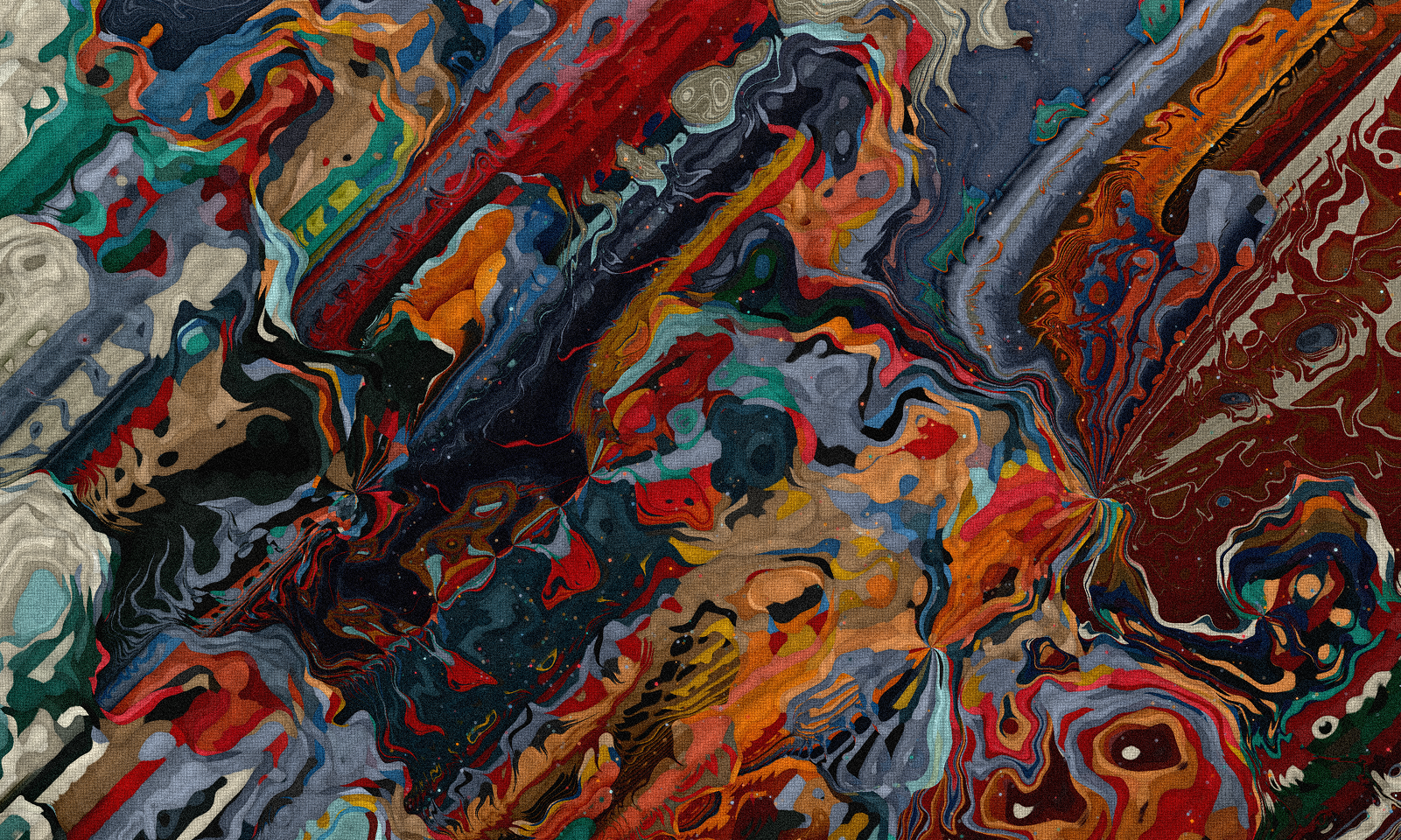
fxhash+ presents Deliverance by Valent, a generative artist and a developer, who approaches creating art as an ongoing inquiry rather than a series of completed works, with each release representing a fragment from a larger, evolving intimate exploration.
What makes Valent’s artworks significant is not its technical sophistication alone, but its insistence that code can carry feeling. Valent's work can be recognised instantly, it is characterised by pixel-level distortion techniques refined with most precision and polished touch. His work demands time, it is theatrical and dense. Artist’s debut series Athanasia (2025) processed themes of depression, regret, and lost time through raw, accumulated visual systems that honored what remains unresolved for artist. Deliverance (2026), his second project and first curated release at fxhash+, continues this trajectory of diving into deeper articulation of personal, almost spiritual inquiries of release. Playing with creation, destruction, darkness, and light, the project evolves from the Athanasia’s engine through expanding his distortion algorithm method.
Formation
Valent lives and works between London and Washington DC. He grew up just outside London and spent most of his life around and in the city. Growing up, the tension between home as a refuge and the streets as a demanding space had its influences. For Valent, it was raw, busy, fast-paced, relentless. ‘When you grow up where I did, being creative young isn't arts and crafts. It's environmental, situational. You're solving problems, reading rooms, figuring things out on the fly. Different world, same process. Resilience in my life is the ability to keep growing and adapting, a skill I had to develop young, coming up in a rough environment, staying clear-headed, choosing a different path, and continuing to build from it."
Valent started coding young because he was obsessed with machines, writing scripts and tools for his own use cases. When it became a career, he shifted into becoming an engineer, continuing to build his own creative experiments. Language agnostic, Valent uses code to think, to discover rather than to just build.
Technology is not utility, it’s a mirror for expression.
Before code, before generative art, there was music. Valent got into making beats with keyboard, he downloaded ripped tutorials for Ableton and After Effects, whatever he could get his hands on. Hitting up studio time with his circle, trading rhymes back to back. Photography and film was always there too, he captured all mundane things, mostly through his phone, exploring perspective and turning those into short scenes.
Valent has been always drawn to systems. How do parts form the whole? How does perspective change everything? How can intention redirect force?
One of his favourite games growing up was Zeus: Master of Olympus, where he'd spend hours architecting optimal cities, laying out efficient trade routes, trying to win the favor of the gods. Maps, as examples of a system, fascinated him too, especially old ones. "I think the power of perspective is massively underrated. A map is just someone's way of saying 'this is how I see where things are.' That's a point of view, not an objective."
He loves learning how things work from the inside out, understanding the forces beneath the surface, for example, in machines. "The way I've come to see it, machines are just nature we've learned to direct. The same forces, the same physics, just shaped by intention. Our own form of nature we've found ways to steer."
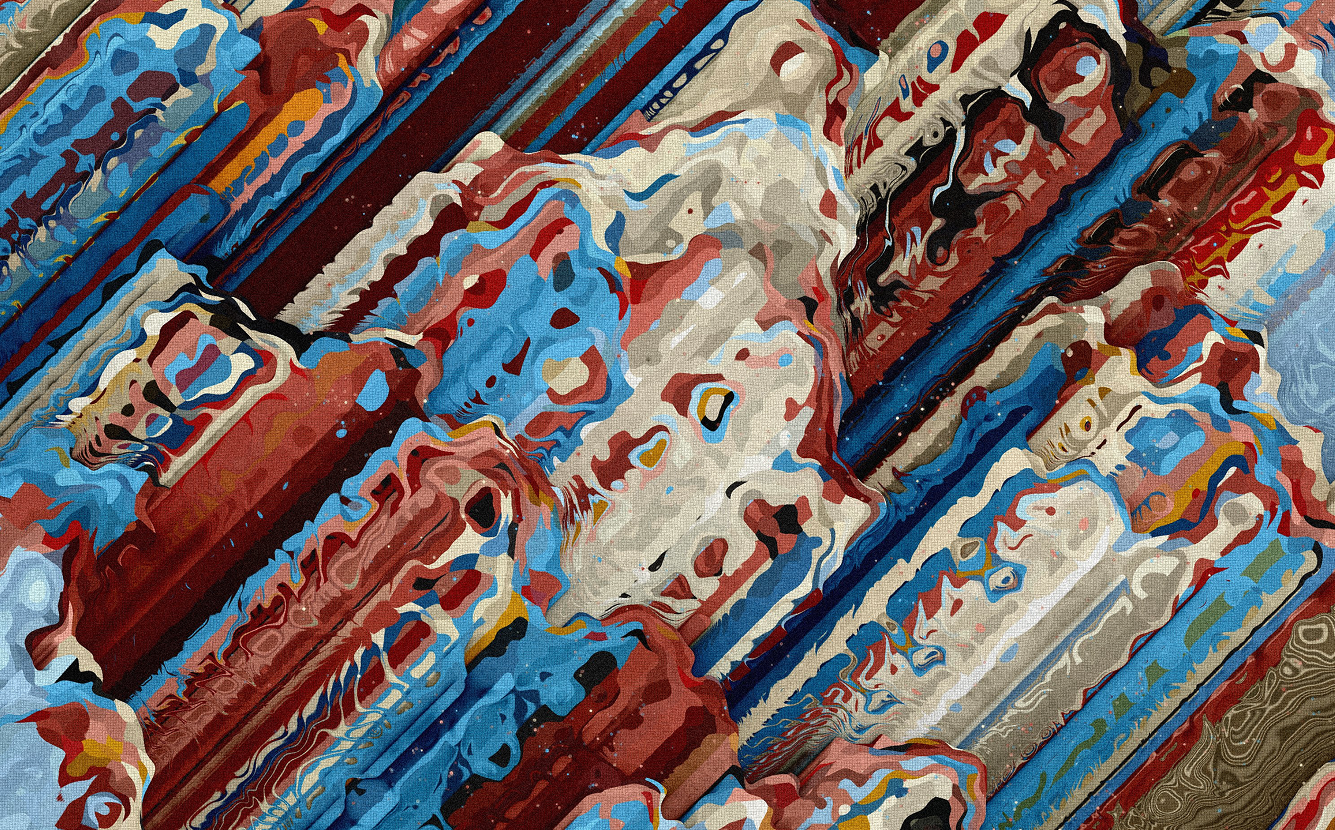
Following closely early decentralised scene when the communities grew, he found himself as a collector and advocate for onchain art. Collecting became a dedicated observation of the generative systems, styles, engagement in the dialogues with other artists. Later, Valent entered the scene with his own debut generative series Athanasia. Created during the period of depression, the work functions as both escape and expression simultaneously and a way for him to process and accept regret, and, in a way, lost time.
Being vulnerable publicly isn't comfortable and Valent steps in once again in the spotlight creating a space and dialogue for real, raw and strictly personal interactions with art and ourselves.
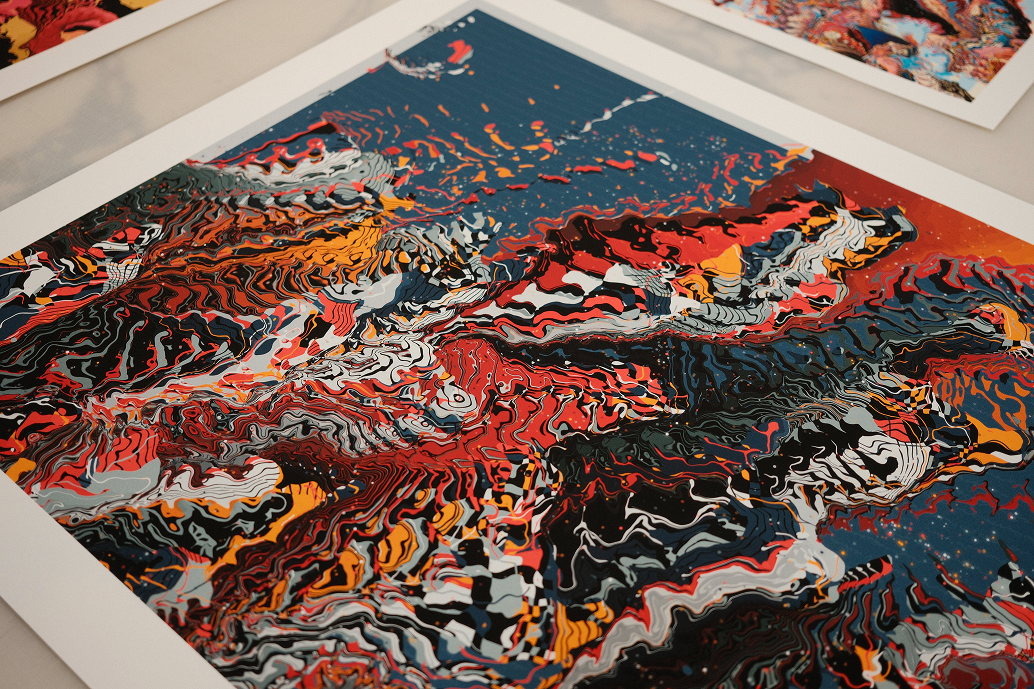
Deliverance
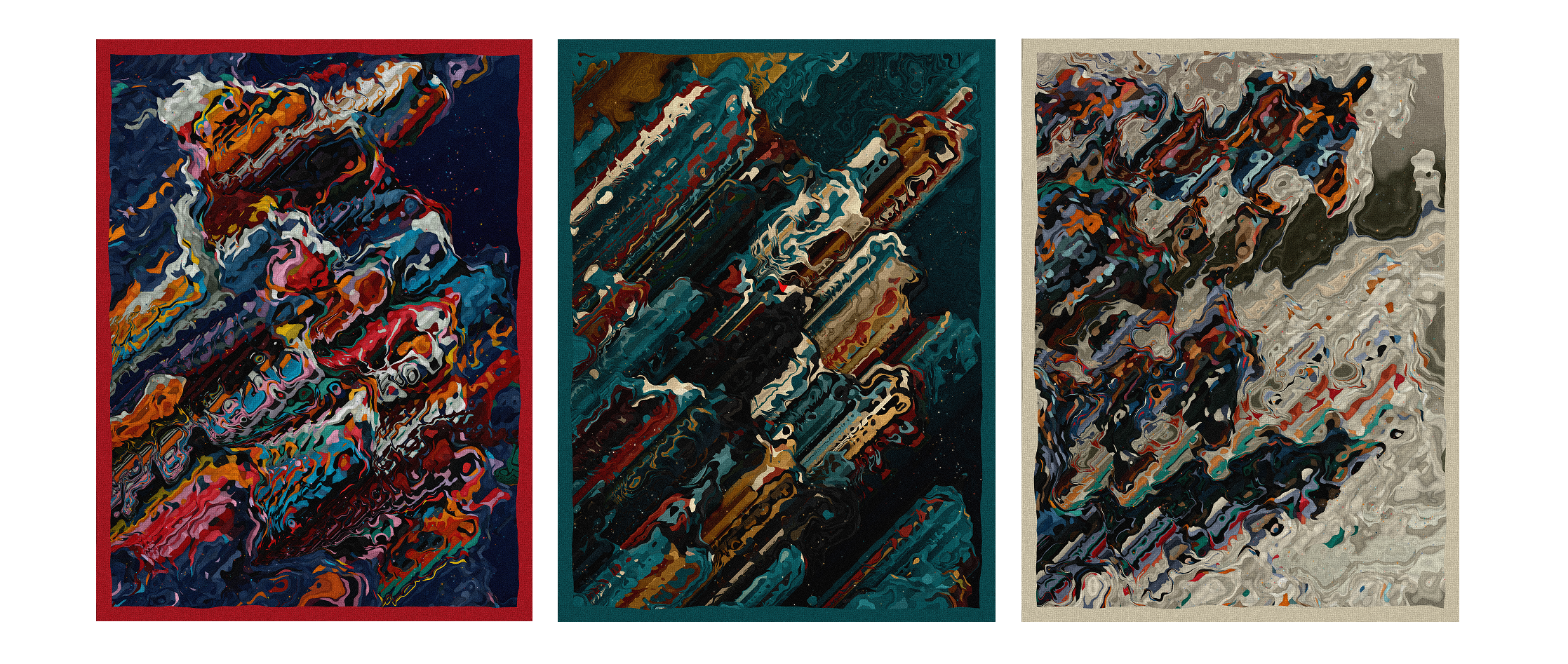
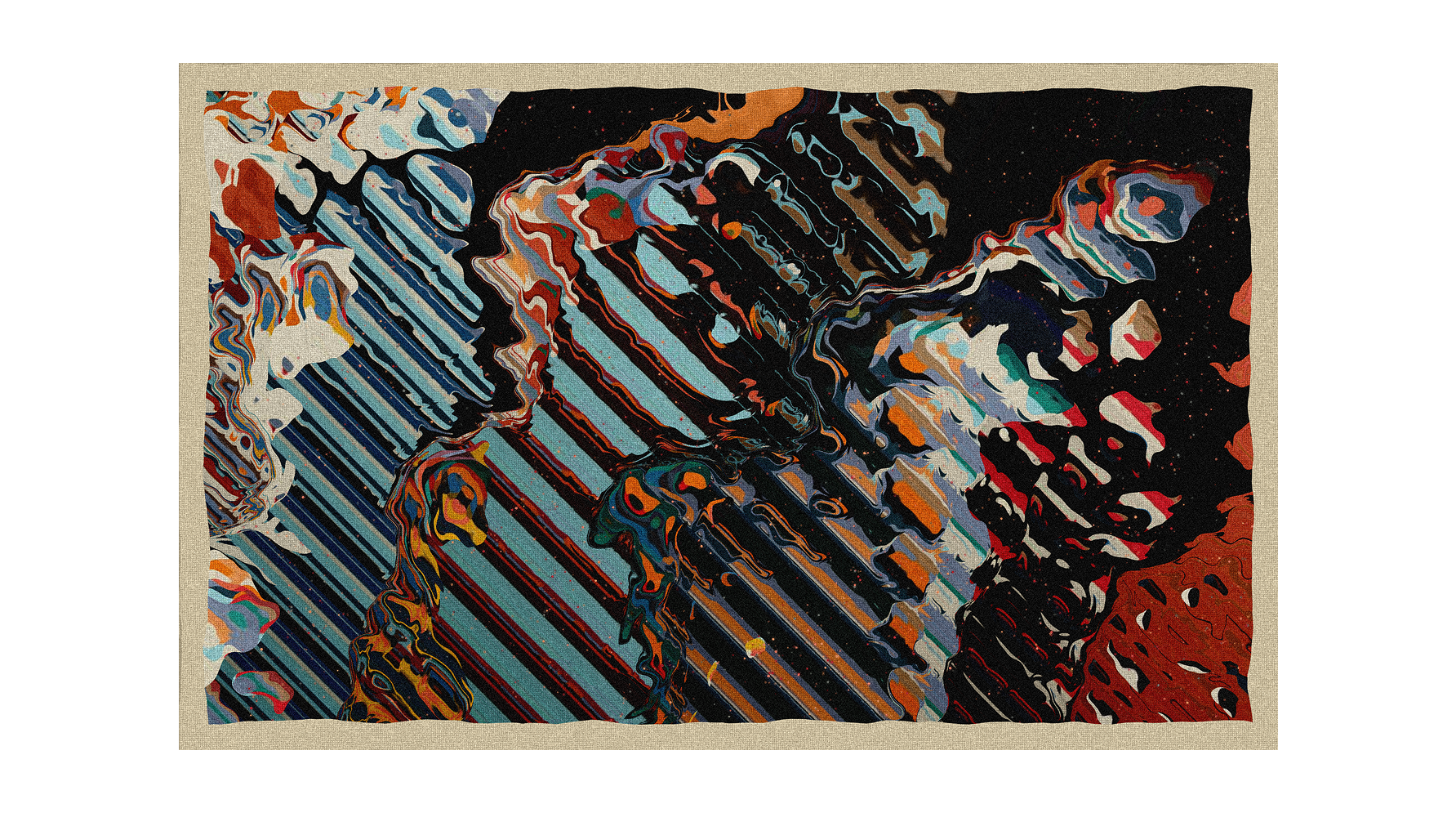
Deliverance accomplishes what is so hard in algorithmic non-figurative art: a level of refinement reaching immersive presence typically associated with physical painting. Deliverance as a concept often explored in culture especially in periods of crisis, both individual or collective, when systems fail, identities fracture, and people seek meaning. The imagery is carefully structured, it acknowledges pain without romanticising it and frames release as agency. For Valent it is a ritual, a transition, breaking free in a way that feels devotional after crises.
Prominent for this series is Valent's research into pixel-level distortion. Deliverance is fully code-based with complexity emerging from stepwise pixel manipulation, reading and writing upon the same source iteratively, creating what artist describes as "a texture and artifact language", his signature style. Valent's distortion method allows him to reach unique outputs with refined color harmonies, yet he explicitly rejects technical superiority as a measure of value: tools are universally available, creativity emerges from intention, not capability.
''I focus on how the art makes you feel as the priority, and the technical secondary to that. We're not programs. We're human.''
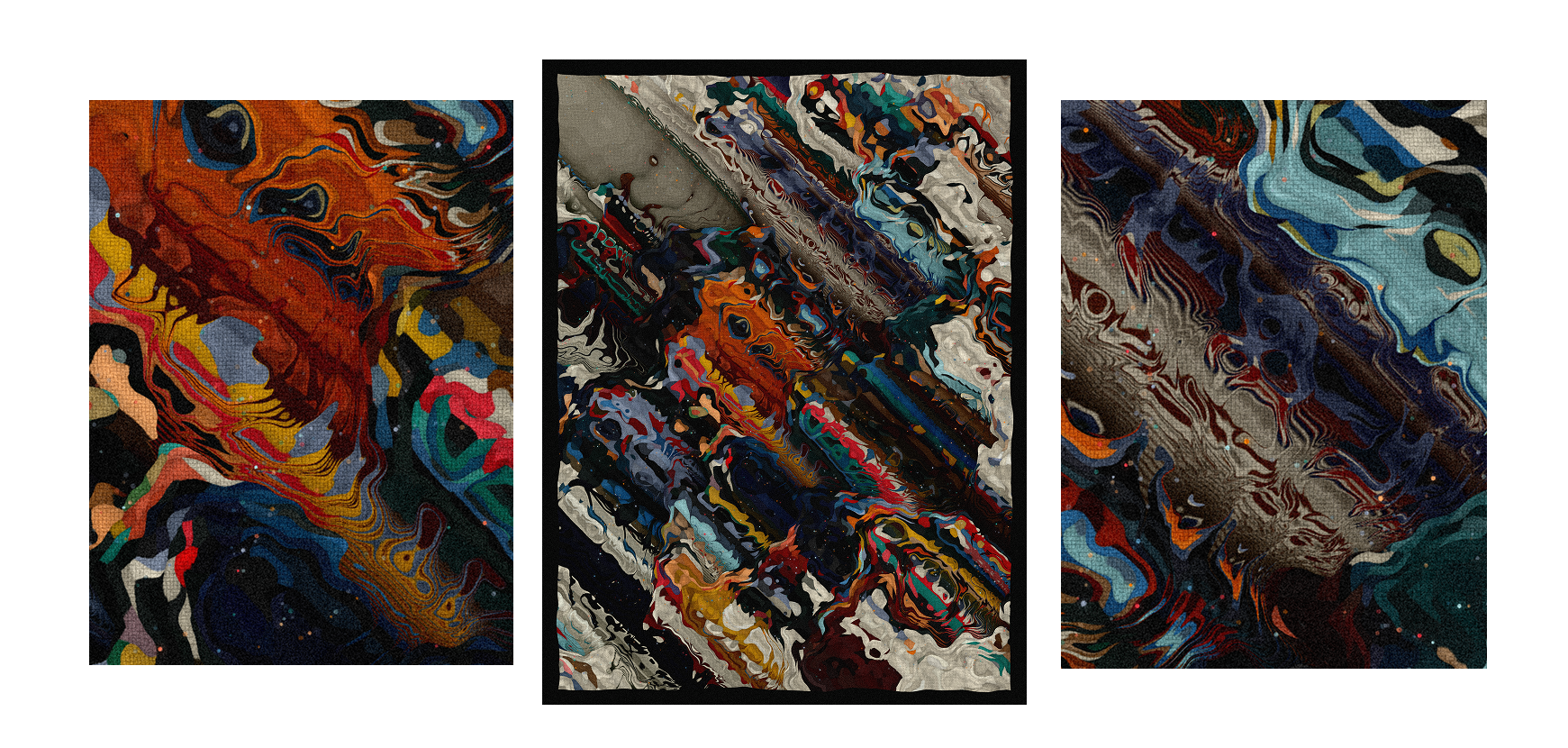
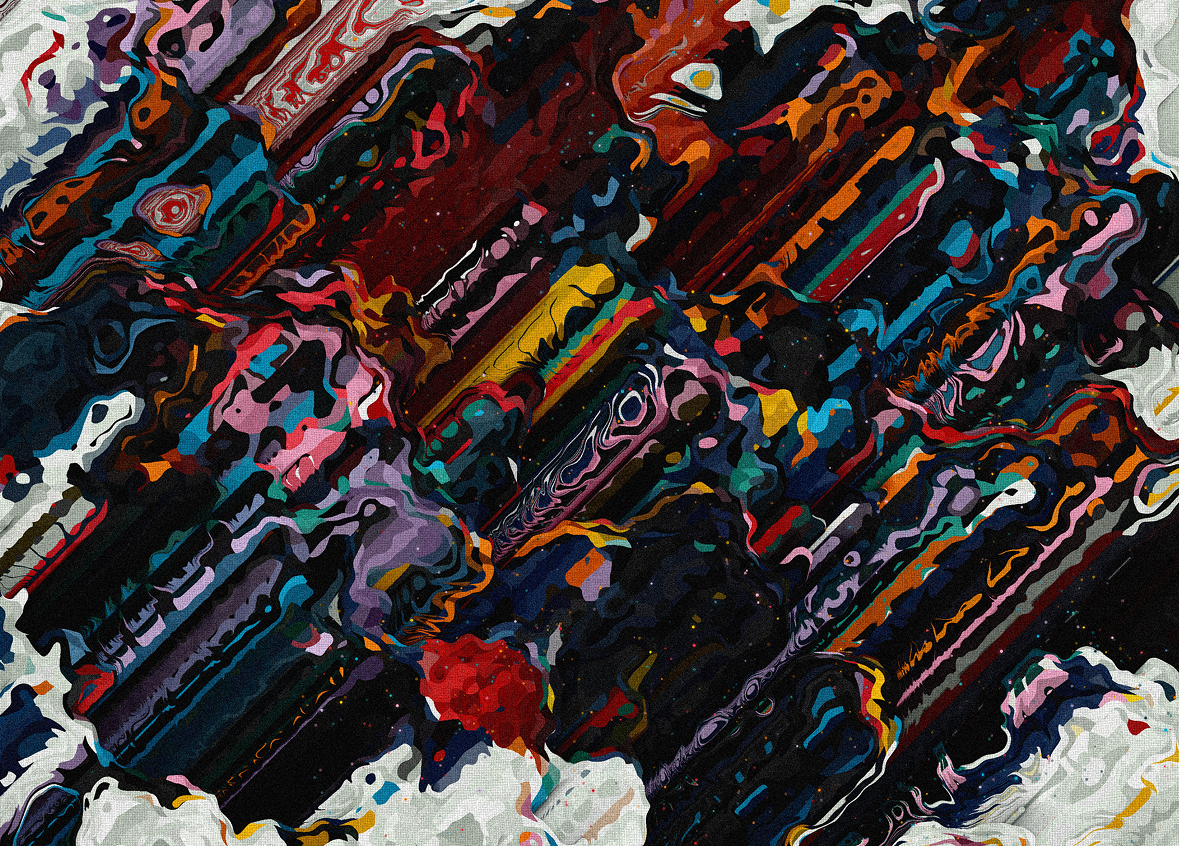
The work premieres on February 18th, as artist-curated series available to collect via Ranked Auction.
Plus: Insights
What did technology mean to you before you saw it as an artistic medium?
It's hard to think of a time before it was artistic, honestly. My first mobile phones, the usernames I chose, the way I wanted things to look. I was making artistic decisions before I knew that's what they were. So there wasn't really a moment where tech shifted from utility to art. It was always both. I just didn't have the language for it yet.
When did you realize you were using code to think, not just to build?
A friend I worked with in my very early years taught me that. He showed me how to think about code as thought, as discovery. You write something not because you know where it's going, but to find out. You test an idea by running it. You let the output teach you what you were actually asking. He passed away tragically, far too young. But that way of seeing stayed with me.
How do you think collecting shaped you as an artist?
Collecting primarily helped me become more tuned to myself. During some of my most difficult times, it allowed me to curate my emotions, to express myself in a way I hadn't felt before. I noticed that I'm able to connect with very different types of work. The range of my appreciation just kept growing. The more I collected, the more I understood that my taste wasn't narrowing but expanding. That translated to where I am today and how much I emphasize the power of emotion that art can and should bring.
When did you first feel the urge to publish rather than keep work private?
Depression, honestly. Sharing felt like getting it off my chest. There was a point where keeping it private wasn't protecting anything and it was just holding it in. Publishing became a release. Not for validation. Just to let it out.
What was the hardest part of stepping into authorship after years of observing others?
Imposter syndrome, probably. Part of you still feels like you're on the outside looking in, even when you're not anymore.
How do you decide what stays private and what becomes part of the work publicly?
Being vulnerable publicly isn't comfortable, but if I see it can connect and someone else can feel something, it's worth it. There's a lot about Athanasia I haven't shared, and probably never will. Maybe with time you'll learn more through my work.
You talked about honoring what is unresolved in Athanasia. How does that show up in your decisions in code?
It shows up in restraint. I write rules that allow tension to remain present. The recovery stays imperfect, the cleanup never quite finishes and resolution gets close but doesn't land. Human imperfection is what makes art relatable and meaningful, and I code with that thought. I hope people understand my relationship with the unresolved, and maybe find solace in that way of seeing.
How did the idea and the architecture of Deliverance evolve?
Deliverance is a code-based study of release. Deliverance is the moment of release. It's almost ritual, about that transition, breaking free in a way that feels devotional. Beautiful and bitter at the same time, holding everything, just differently.
It starts from a similar strategy on architecture level as Athanasia, but mostly as a reference point. I generate a new map of facets, then manipulate it differently. My research is based on the combination of iterating through the detailing of the base layer and patternage, combined with rewriting the distortion algorithm into several versions. The underlying connection with the previous work is intentional. It's meant to read as real evolution.
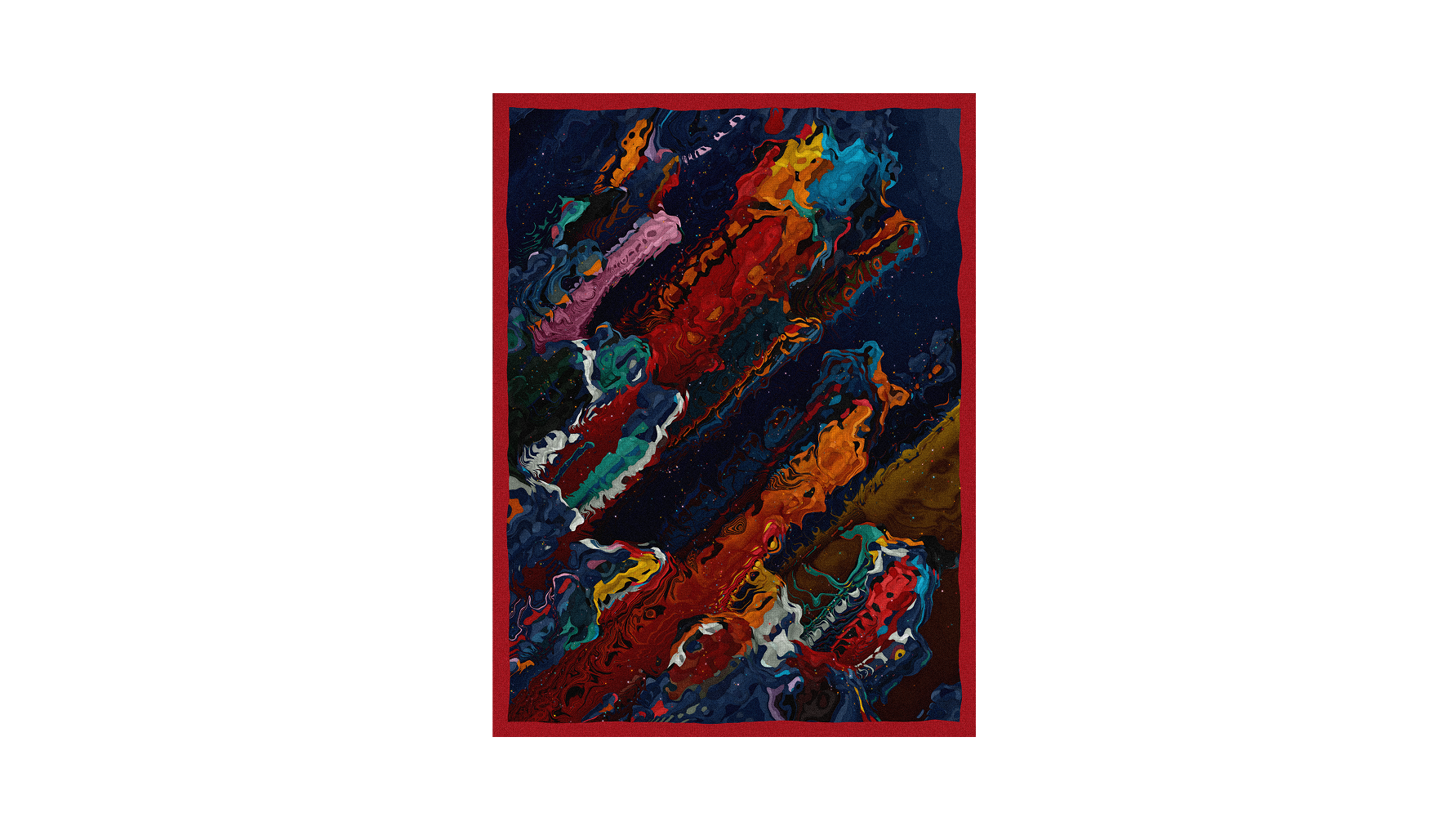
Your work is clearly highly crafted, yet it never feels like it’s trying to show off its process. How do you think about the visibility or invisibility of technique in your practice?
Everything is intentional. I think the skill that's hardest to see is making technical work not feel technical. I'm not interested in the work announcing how it was made. The craft should disappear into the piece. I want someone to feel something first, and only later, if they care to look closer, realize how much is actually happening underneath. The technique is there. I just don't need anyone to applaud it.
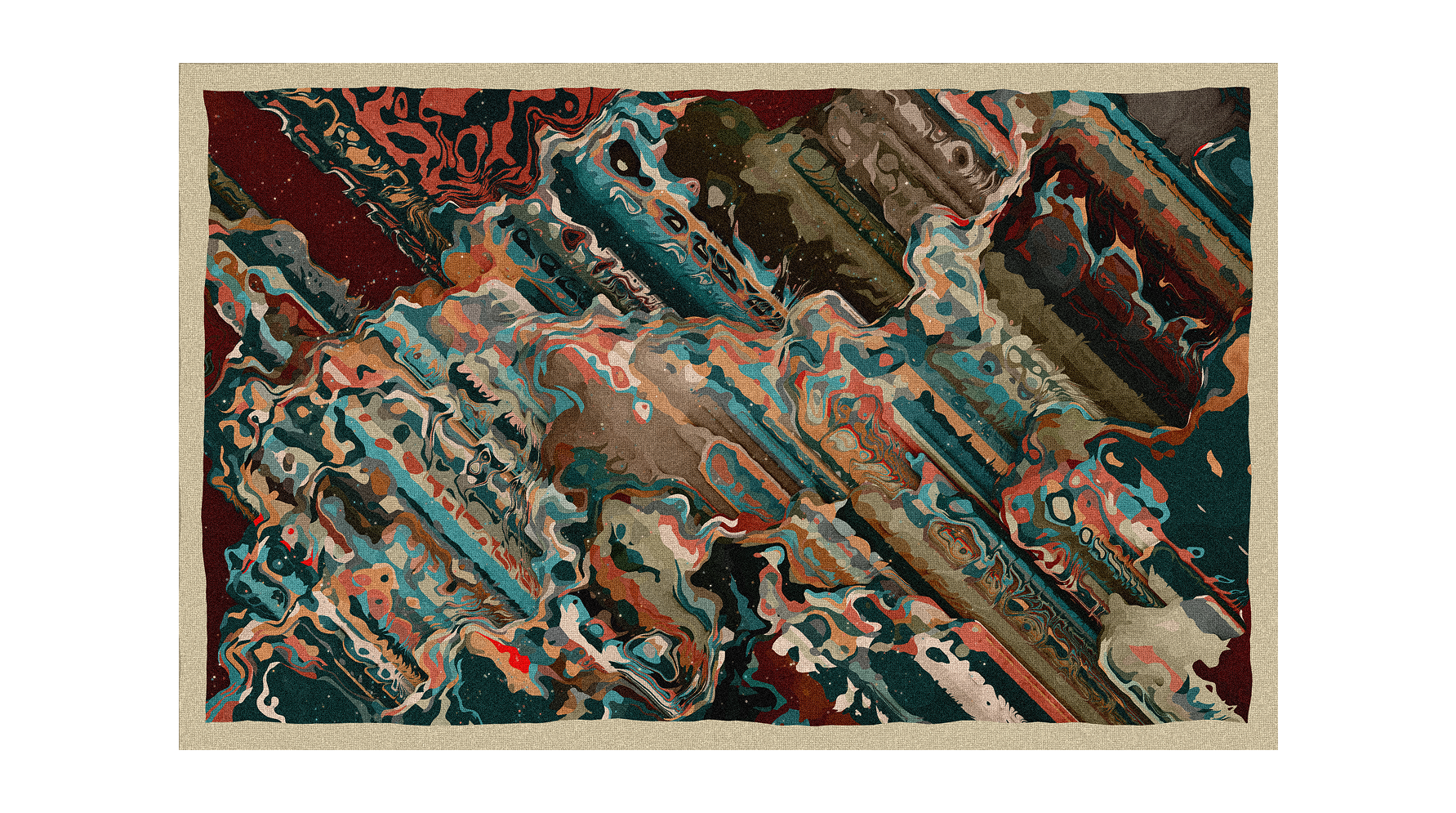
Name one more thing that is intentional in Deliverance.
Duality is intentional. Structure that's directional, and color like something alive. It's about depth and believability without literal realism.
How do you make a choice of "that one artwork" in the generative system?
Harmony. Between the colors, the composition, the uniqueness of that particular output. When those three align, you feel it. Resonance through randomness.
What do you bring from that your job as a developer into your art practice?
Discipline still matters, even when no one's asking for it. In algorithmic art, you can do anything. There are no requirements, no specs, no one checking your work. But I brought this sense that some things are worth doing properly. Not for anyone else. For yourself. The rigour isn't about proving something to the outside world. It's about knowing you built it right, even if no one ever sees the scaffolding.
About the artist
Valent is a generative artist and developer based between London and Washington DC.
His practice is grounded in the belief that technology functions as a mirror for thought and feeling rather than mere utility. Before entering the generative art space, Valent built a career in software engineering while maintaining a parallel practice of writing code as a form of personal expression and inquiry. His collecting practice within Web3, became a method of emotional curation during difficult periods, an experience that fundamentally shaped his approach as an artist.